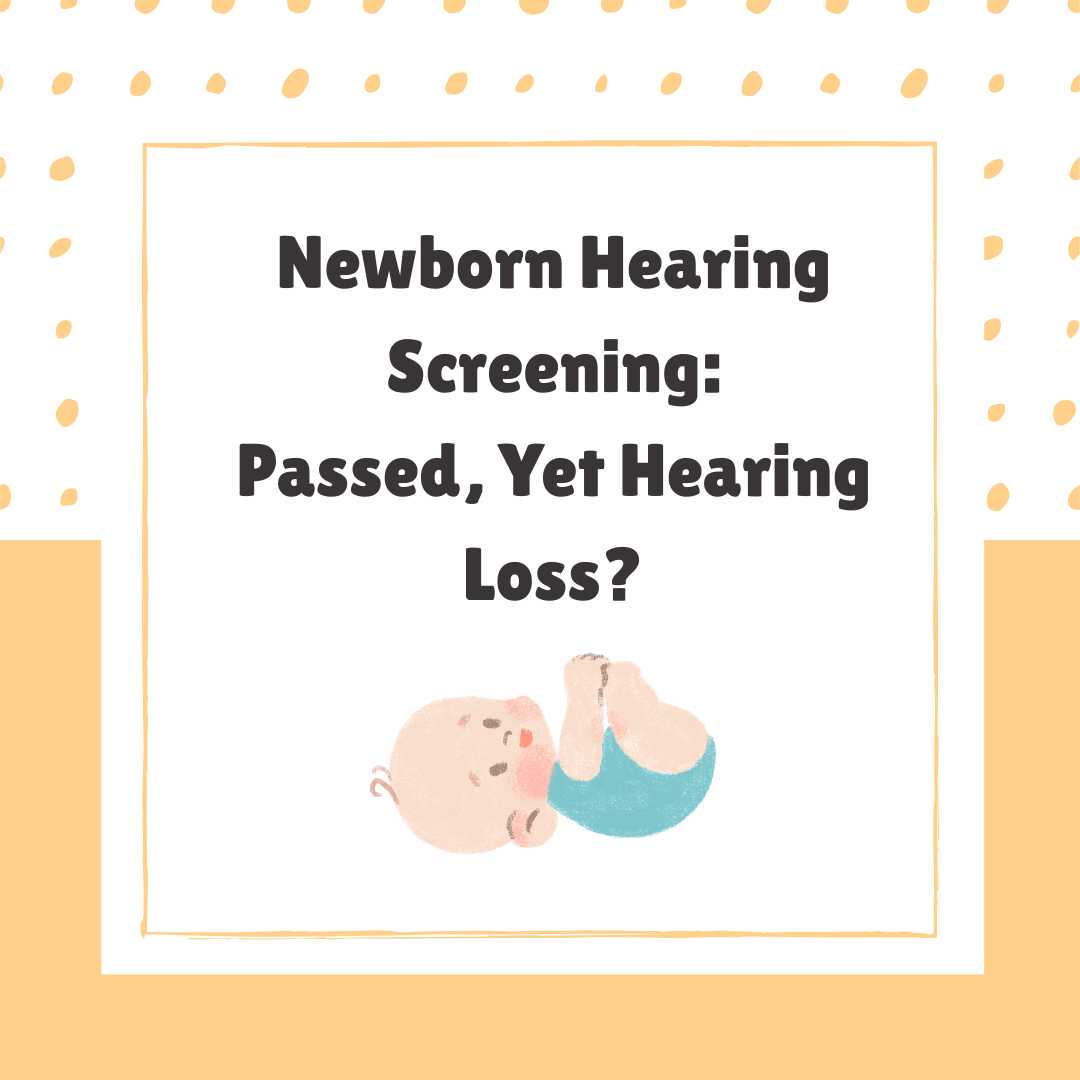
George, the younger brother of the much-loved cartoon character Peppa Pig, has been diagnosed with hearing loss in one ear. When Daddy Pig hears this, his reaction is: "But didn't he pass the newborn hearing test?"
This is a question many parents ask, and it's completely understandable. This article explains what newborn hearing screening does, and what it doesn't do.
Newborn hearing screening is carried out shortly after birth. Its aim is to spot babies who may have significant hearing difficulties as early as possible, so they can receive further checks and support quickly if needed. To make sense of the results, it's important to understand what "pass" and "did not pass" really mean.
If a baby does not pass the screening, it does not automatically mean they have permanent hearing loss. There are many common and temporary reasons for this. For example, there may still be fluid, discharge, or earwax in the ear canal. Some babies move or cry during the test, or the room may be noisy, which can affect the results. Of course, a hearing loss is also possible. For this reason, a "did not pass" result simply means the baby should be referred for more detailed hearing tests.
If further tests confirm that a baby does have permanent hearing loss, there are many possible causes. Some babies are born with hearing loss due to genetic reasons, meaning they carry genes that affect hearing. In some cases, genetic hearing loss occurs alongside other medical or developmental features, while in others it affects hearing only. Importantly, even when hearing loss is genetic, most parents do not have hearing loss themselves.
Hearing loss can also be linked to infections during pregnancy, such as cytomegalovirus (CMV). In some babies, hearing loss develops shortly after birth. This is more common in premature babies and may be related to infections, certain medications, severe jaundice, or a lack of oxygen around the time of birth.
So what if a baby passes the newborn hearing screening? This usually means that, at the time of the test, the baby's hearing was within an acceptable range. We avoid saying "normal" because the screening is designed to pick up more obvious hearing loss. Babies with mild hearing loss may still pass the test.
It's also important to know that some children are born with normal hearing but develop hearing loss later in childhood. This is called acquired or late-onset hearing loss. Possible causes include serious infections such as meningitis or measles, head injuries, or certain genetic conditions where hearing gradually worsens over time.
Newborn hearing screening is a very important first step, but it is not the final word. Whatever the initial result, parents' ongoing observations are vital. If you ever have concerns about your child's hearing, listening, or speech and language development, it is always worth seeking further advice.
Reference
National Deaf Children's Society, UK
.png)
Search
Recent Posts
- Understanding Glue Ear in Children
- Newborn Hearing Screening: Passed, Yet Hearing Loss
- Reading Between the Lines: Why Figurative Language Can Be Tricky for Autistic Children
- Speech and Language Delays: What Parents Should Look Out For
- Understanding Your Child's Speech: What Predicts Speech Sound Development?
Categories